
The Challenges of Breathing New Life into Architectural Heritage with reference to timber window restoration
26/03/2026
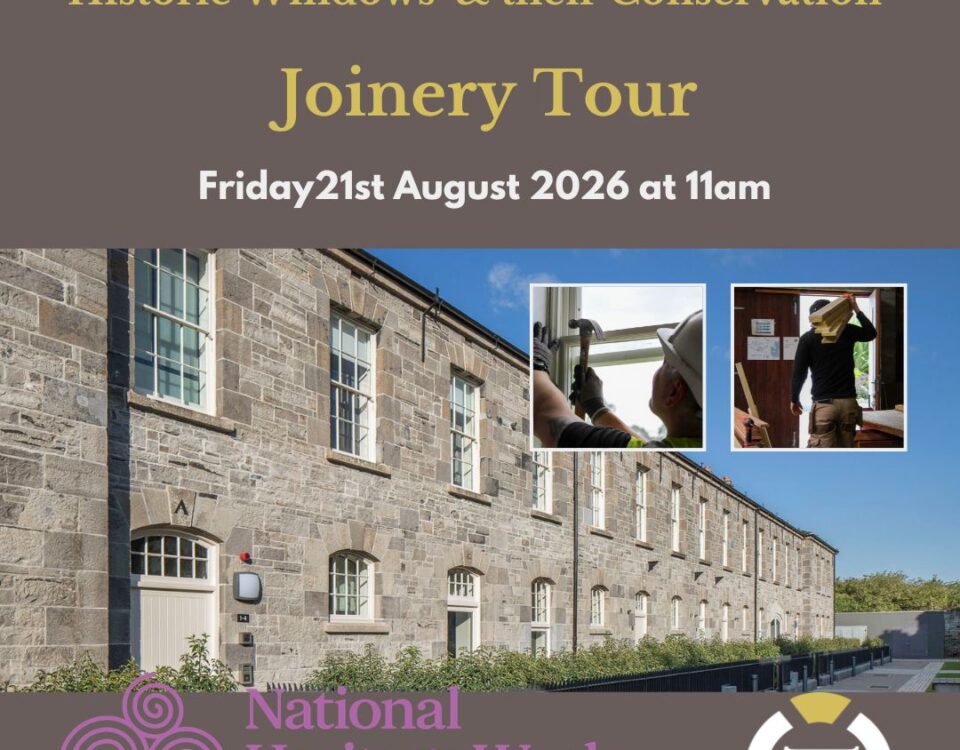
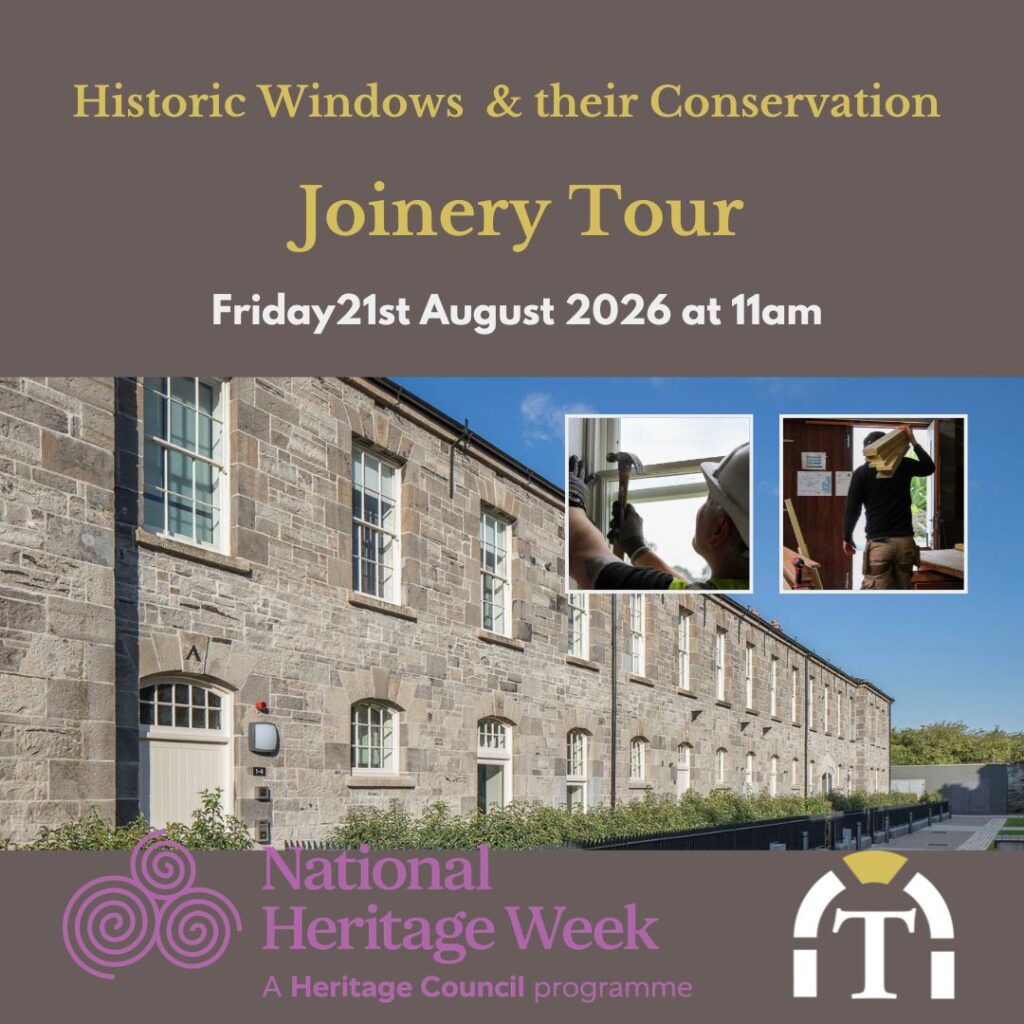
National Heritage Week 2026 – Events
22/07/2026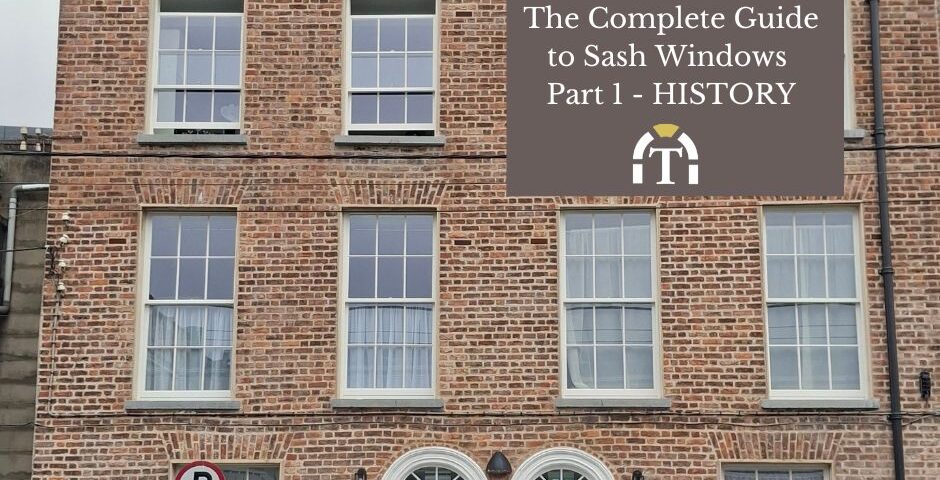
This complete guide to sash windows will dive into the history of sash windows in Britain and Ireland, the anatomy and mechansim of sash windows, options on glazing and U-values, timber, ironmongery, painting and maintenance, This deep dive will give you a greater understanding of what you are looking at and looking through and looking for, when you consider sash windows. Homeowners, specifiers, architects, joiners and students will be able to find information relevant to their research here. If in any doubt, you can contact us via email or phone to assist with bespoke advice. As this is lengthy research it will be separated into a number of blog posts.
The Timeless Appeal of Timber Sash Windows
Timber sash windows were, and remain, a sought-after feature in properties, both period and newbuilds. They are a unique design of window that evolved incrementally over time alongside the political, economic and social changes since the late seventeenth century. The name “sash window” originally comes from the French word “chassis”, which means frame. There are links to both the Dutch and French influences in window design at the time.
Sash windows remain one of the most architecturally significant window types in Ireland and the UK, defining many of the buildings from the late 1600s up until the early 1900s. They are particularly suited to the climate of these islands with their unique system of ventilation when opening both sashes. Additionally the nature of their design not being under the influence of their own weight, they have incredible longevity when well cared for. However, increasing pressure on thermal efficiency of buildings and modern living expectations puts tension on conservation and heritage preservation., and the case for retrofitting double glazing.
History of Timber Sash Windows
1. Early Development
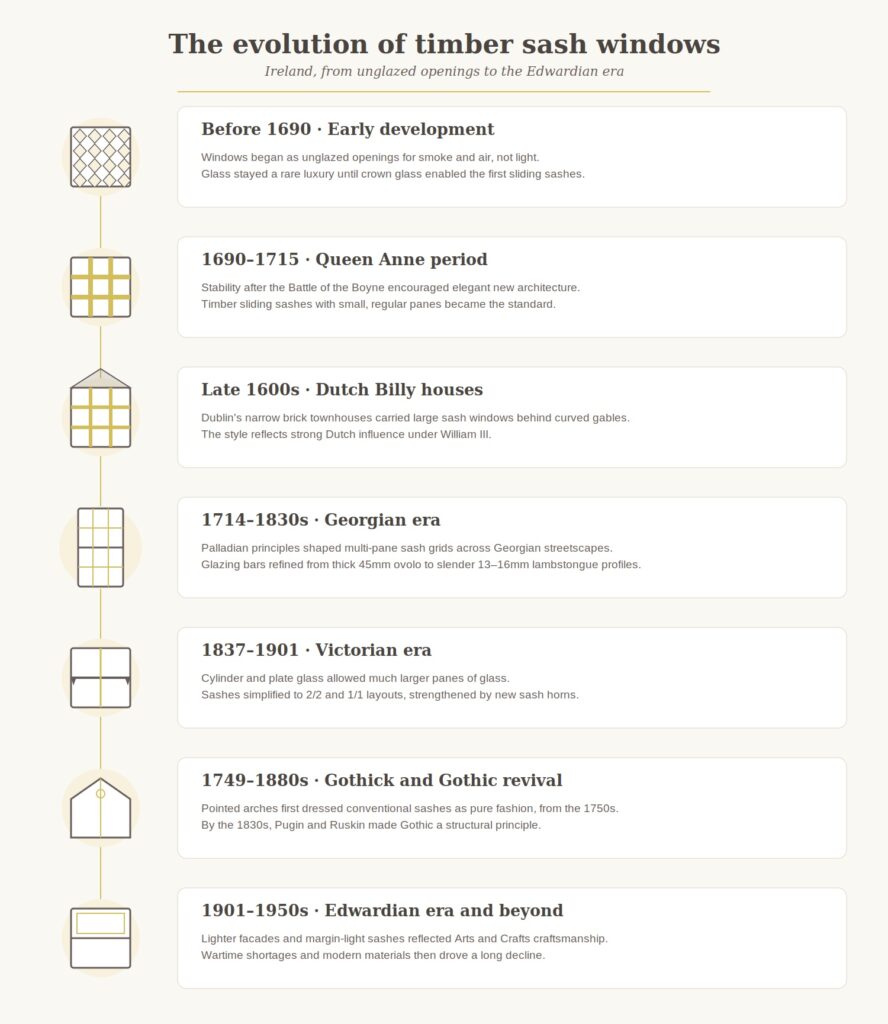
The story of the sash window begins long before glass itself became part of domestic life. In early medieval Ireland and Britain, a window was simply an opening in a wall, closer in meaning to its Old Norse root vindauga or “wind eye” than to anything we recognise today. These apertures were designed for ventilation and smoke escape rather than light or outlook. In ordinary dwellings they were left unglazed, sometimes covered with timber shutters, or cloth, and often left entirely open to the elements. Even in larger structures such as timber framed houses in England or stone tower houses in Ireland, windows remained small and defensive, as in the case of arrow slits. Mullions divided wider openings – apertures divided vertically by slender piers of stone or oak (the mullions) and sometimes further sub-divided horizontally by transoms. into narrow vertical sections, and iron bars or shutters provided security. In Ireland especially, the need for protection shaped design, with narrow openings that functioned as much for defence as for light.
Glass in windows was, for most of the medieval period, an almost unimaginably expensive luxury confined to churches, abbeys, and the grandest secular buildings. Early glass was formed into small pieces known as quarries, typically diamond shaped, and joined together with lead strips to create leaded panels. These were set within mullioned frames and often reinforced with iron bars. The glazing material itself was imperfect, produced through methods that yielded small, uneven panes with a slight tint and visible flaws. In Ireland, glassmaking did not begin until the early seventeenth century and even then remained fragile, shaped by imported skills and strict trade controls. Over time, however, increasing prosperity in the Tudor period brought glass into domestic architecture in Britain. Larger windows appeared in the homes of wealthy landowners and merchants, and glazing became a visible marker of status. Buildings such as Hardwick Hall in England or Ormond Castle in Ireland demonstrated this shift, where the presence of glass signalled wealth as much as it provided light.
A major turning point came with the development of crown glass in the late seventeenth century. This new method produced clearer and larger panes, making it possible to move away from heavy leaded construction towards lighter timber glazing bars. As glass improved, window design began to change in response. The traditional casement window, hinged at the side, remained common but had practical drawbacks in wet and windy climates and struggled to accommodate larger panes. The solution emerged in the form of the sliding sash window, though its precise origins remain debated. What is clear is that by the late seventeenth century it had gained favour in Britain through royal and architectural patronage, and soon spread to Ireland. Early examples were simple, but the introduction of counterweights transformed their usability and elegance. By the early eighteenth century, the sash window had become the defining feature of urban architecture, marking the end of a long evolution from unglazed openings to a refined and highly engineered element of the built environment.
2. Queen Anne Period (c.1690–1715)
The Queen Anne period marked an important transition in Irish and British domestic architecture. The Battle of the Boyne in 1690 reshaped Ireland’s political landscape and encouraged greater stability. New country houses emerged alongside expanding towns and cities. Dutch and English architectural influences blended during this period. Architects favoured balanced proportions, restrained classical detailing and carefully ordered façades. Timber sliding sash windows became a defining feature. Joiners assembled small glass panes within thick glazing bars because glass production limited pane sizes. These early sash windows admitted more daylight than traditional casements while maintaining structural strength. Their proportions established the design principles that later defined Georgian architecture.
Ireland retains only a handful of substantial Queen Anne houses. The best-known examples include Kilmacurragh House, County Wicklow, Beaulieu House, County Louth and the Mansion House, Dublin. Kilmacurragh House holds particular architectural significance. Sir William Robinson designed the house around 1697–1702 as one of Ireland’s earliest unfortified country houses. The building preserves the balanced proportions and refined sash window design that characterise the period. Its ongoing conservation provides a rare opportunity to study original eighteenth-century timber windows, traditional joinery methods and historic glazing details. These surviving houses form an important bridge between Ireland’s fortified domestic architecture and the elegance of the Georgian era.
3. Dutch Billy Houses
The same political and economic changes also transformed Ireland’s growing towns. Builders introduced the Dutch Billy during the late seventeenth century, particularly in Dublin. These narrow brick houses reflected strong Dutch influence under William III who succeeded at the Battle of the Boyne in 1690. Their distinctive curved or stepped gables defined the streetscape. Large timber sliding sash windows dominated the front elevations. Craftsmen arranged multiple small panes within slender glazing bars to maximise natural light. The larger window openings improved interior comfort and reflected growing confidence in sash window technology. Dutch Billy houses therefore represent the urban expression of the same architectural movement that shaped Queen Anne country houses. Together, they established the timber sash window as the dominant window form in Ireland before the Georgian period refined its proportions and detailing.
4. The Georgian Era (1714–1830/7)
The defining charactersitics of Georgian sash windows are the muti-paned grid and increasingly refined proportions. Georgian architecture, inspired by the Renaissance movement spreading up through Europe, has its roots in mathermatics. The Renaissance is in effect a revival of classical style of architecture originating from Greece and Rome. In the UK and Ireland, classical architecture became a guiding ideal rather than a strict copy of ancient buildings. Architects used its principles to create calm, balanced designs, whether for grand public buildings or simple townhouses. The emphasis was always on harmony and order, with windows, doors, and structural elements arranged in a clear and logical way. If you like to imagine that classical architecture is the original source, and Renaissance inspired architecture is the rediscovery, Palladian architecture (named after Andrea Palladio, a sixteenth century architect from Italy who studied ancient Roman buildings and wrote about their principles in a clear and systematic way. His work distilled classical architecture into a set of rules based on symmetry, proportion, and simple geometric forms in his four books on Architecture.) is the refined rulebook that made those ideas practical and consistent. Georgian architecture is what happens when that rulebook is applied at scale across cities and everyday buildings in Britain and Ireland.
Several influential architects shaped the development of classical and Georgian architecture in Ireland, bringing ideas from Britain and continental Europe and adapting them to local conditions and materials. One of the earliest and most important figures was Inigo Jones. Although he worked mainly in England, his introduction of Renaissance classicism had a lasting influence on Ireland. His ideas were carried forward by later architects who worked directly on Irish buildings. Among these, Sir William Robinson played a key role in the late seventeenth century, helping to introduce more regular and classical forms to public buildings in Dublin. Likewise, in the early eighteenth century, Edward Lovett Pearce emerged as a central figure. He is often credited with firmly establishing Palladian and classical principles in Ireland. His work on the Irish Parliament House set a new standard for symmetry, proportion, and refinement. Another major name is Richard Cassels (also known as Richard Castle), who designed many of Ireland’s great country houses, blending grandeur with disciplined classical planning. Later in the Georgian period, James Gandon made a profound impact on Dublin’s cityscape. His designs, including the Custom House and the Four Courts, are among the finest expressions of neoclassical architecture in these islands. Alongside him, Thomas Cooley contributed to important civic buildings, helping to shape the formal and monumental character of the capital. Together, these architects transformed Ireland’s built environment. They moved it from a mix of medieval and early modern forms into a coherent classical language, one that still defines much of Dublin and continues to influence how windows, facades, and proportions are understood today.
The multi paned sash windows that define this architecture had grids of crown glass. This is a mouth blown glass, whereby the glassmaker blows a globe of glass and then holds it on a pontil rod towards the furnace. He spins the rod with increasing speed and the globe of glass unfulrs into a large disc about 4feet in diameter which is cooled and cut. The resulting panes of glass were not very large, so joiners developed a grid of glazing bards to hold them in place. As glass technology evovled, windows evolved from 8/8 to 6/6 or other configurations. The glazing bars were also refind from very early 45mm ovolo bars to delicate 13 – 16mm lambstongue bars.
In Ireland there were two taxes imposed by the government, which in some instances caused property owners to brick up their windows to avoid the penalties. This is where the term “daylight robbery” was coined across Britain and Ireland. In Ireland the window tax (on the number of windows) was imposed from 1799 – 1822 and the glass tax (on the weight of the glass) from 1825 – 1845. This was a considerably shorter time than in Britain, so Ireland benefitted from the skilled craftspeople that moved here during this time to pursue their profession. In reality, there was large outbreaks of diseases such as smallpox across the population, often caused by the lack of ventilation in the buildings, so it was pressure from the physicians on the government that caused the eventual repeal of these taxes and the development of a property tax mor in line with what we have now.
5. The Victorian Era (1837–1901)
The Victorian era is synonymous with the industrial revolution and the emergence of Britain as the worlds first superpower. This industrialisation had a profound effect on architecture and we really see a move away from the rigidity of the classical fashion, and also the emrgence of 2/2 and 1/1 sash windows. Due to the larger single panes of glass, the joiners were obliged to strengthen the integrity of the joints of the windows. This takes to form of the sash window horn, which you don’t see on early to middle and often later era Georgian windows as they are strengthened integrally by the glazing bars.
This prnounced change was due to the arrival of cylinder and plate glass. Both glass types allowed for larger panes of glass. Cylinder glass was still a mouth blown glass, however, instead of a globe of glass, the glassmakers could create a larger cylinder of glass which was then cut and put back into the furnace to unfurl into a flat sheet. This technique was brough to England from France by the Chance brothers in 1832 and subsequently into Ireland. More affordable larger panes of glass, in addition to their ease of transport, made for a widespread use.
Victorians looked back at the constraints, rules and symmetry of Georgian architecture with disdain and a new, picturesque style emerged. Sash windows, however, remained the predominant window type, yet they were arranged in a more assymetrical way. This is also sometimes referred to as Queen Anne Revival architecture, which is a later reinterpretation of earlier traditions, marking that clear shift away from the strict discipline of Georgian classicism. Despite the name, it does not closely replicate buildings from the actual reign of Queen Anne in the early eighteenth century. Instead, it emerged in the late nineteenth century as part of a broader interest in reinterpreting historical English and Dutch domestic architecture in a freer and more picturesque way. The style is most closely associated with architects such as Richard Norman Shaw, who helped popularise it in Britain and whose influence extended to Ireland. As such Victorian buildings often feature red brick, asymmetrical facades, gables, bay windows, and a mix of materials and textures. Unlike the rigid symmetry of Georgian architecture, these buildings are deliberately varied and informal in appearance. They draw loosely on seventeenth and early eighteenth century precedents, including Dutch influences, but they are ultimately a Victorian reinterpretation rather than a faithful copy.
In terms of sash windows, the style did not abandon them but adapted them. Georgian sash windows were typically very regular, with evenly sized panes arranged in strict grids, reinforcing the overall symmetry of the facade. Now sash windows became more expressive. Bay windows and projecting oriel windows also became common, allowing sash windows to be grouped and angled rather than set flat into a facade. The proportions and detailing of sash windows also changed. Frames could be thicker, glazing bars more varied, and arrangements less uniform across a building. Small pane patterns, sometimes in decorative arrangements, were used to add visual interest. In Ireland and Britain, this resulted in streets where sash windows still played a central role, but no longer followed the strict rules established during the Georgian period. Instead, they became part of a more relaxed and individual architectural composition, bridging traditional craftsmanship with the possibilities of industrial era materials.
6. Gothik and Gothic Revival
To understand why pointed arches began appearing in the windows of Georgian Ireland and Britain, you first need to understand the cultural moment that made them desirable. By the mid-18th century, a powerful reaction was stirring against the cool rationalism of the Classical tradition. The Romantic movement was gaining ground, and with it came a new fascination with the medieval past — its ruins, its drama, and what the Irish philosopher Edmund Burke described in 1757 as the sublime: the idea that vastness, darkness, and even a degree of terror could produce a more profound emotional experience than beauty alone. Burke’s argument gave intellectual permission to find pleasure in ruined abbeys, crumbling tower houses, and lancet arches reaching into shadow. Meanwhile, the writer and antiquarian Horace Walpole, son of the British PM at the time, was translating that sensibility directly into bricks and mortar. From 1749, he transformed a modest property at Twickenham, Strawberry Hill, nto a mock medieval castle, complete with battlements, pointed windows, and fan-vaulted ceilings copied from Westminster Abbey. Walpole was a passionate collector of medieval fragments and manuscripts, and he was, crucially, reacting against what he saw as the imposed foreign tyranny of Classical symmetry. Gothic, he argued, was organic and native to England. Strawberry Hill became enormously fashionable. Walpole opened it to visitors, and the Gothick style — spelled with a k to distinguish it from the serious Victorian movement that followed — spread rapidly across fashionable British and Irish society. It was, at its heart, a matter of taste rather than architecture. These early pointed windows were not structurally Gothic at all. They were conventional sash windows dressed in medieval costume — glazing bars curved into interlocking pointed arches, set within an otherwise standard box frame and counterbalance mechanism. Playful, arched window heads and arched gmouldings added to the look and style. The Gothic was in the silhouette, not the structure.
The fashion crossed the Irish Sea quickly, and it arrived in a landscape that had its own powerful reasons to find it compelling. Ireland was saturated with the ruins of a medieval world — abbeys, friaries, and tower houses abandoned or destroyed during the Plantations and Reformations of the previous two centuries. For the Protestant Ascendancy — the Anglo-Irish landowning class who had built those estates on dispossessed land — these ruins carried an ambiguous charge that had no real equivalent in England. The Gothic aesthetic was simultaneously picturesque and loaded with historical memory. It was in this context that Bernard Ward and his wife Lady Ann Bligh built their new house at Castle Ward on the shores of Strangford Lough in the early 1760s. Lady Ann was the daughter of the Earl of Darnley, and she spent considerable time in fashionable London society, where the Gothick vogue was inescapable. However, her preference was also personal. Her grandfather was the nephew of the Duchess of York, wife of King James II, and a first cousin of Queen Anne — and the ceiling in the Gothic rooms at Castle Ward was copied directly from the Henry VII Chapel in Westminster Abbey, where her maternal family held burial rights. Her husband, by contrast, was a committed Classicist. The result was architectural history: a house divided precisely in half, its entrance facade Palladian and symmetrical, its garden front Gothick with pointed windows, battlements, and finials overlooking the lough. A contemporary observer, Mrs Delany, noted drily that Lady Ann was “so whimsical that I doubt her judgment.” The remark captures perfectly how the Gothick was understood at this moment — as personal whim, as fashion, as theatre — rather than as any kind of serious architectural conviction. The windows on the garden front at Castle Ward were sash windows behind a Gothick mask: pointed heads cut into the stone above conventional sliding frames, the counterweights and pulleys hidden as always inside the box frame. Form and structure were still entirely separate.
Then, in the 1830s and 1840s, everything changed. The Wars with France had ended, travel had opened again, and a new generation of architects and thinkers had grown deeply impatient with the theatrical superficiality of the Gothick fashion. The pivotal figure was Augustus Welby Northmore Pugin, who published Contrasts in 1836 and argued that Gothic was not a stylistic option but the only morally honest architecture for a Christian civilisation. Ornament, he insisted, must be structurally truthful — it must grow from the building rather than being applied to its surface. John Ruskin deepened this argument in The Seven Lamps of Architecture (1849) and The Stones of Venice (1851–53), insisting that the quality of medieval craftsmanship reflected a way of life that modernity had lost. Together, Pugin and Ruskin transformed Gothic from a fashionable costume into a serious system, and the consequences for windows were immediate and profound. The lancet — tall, narrow, and sharply pointed — became the defining window form of the Victorian Gothic Revival, particularly in ecclesiastical buildings. Paired and grouped lancets, bar tracery of increasing complexity, and large stained glass windows filled churches across Ireland and Britain, from Pugin’s own St Peter’s Cathedral in Wexford to William Burges’s extraordinary St Fin Barre’s Cathedral in Cork. In domestic buildings, pointed stonework appeared above sash frames, or sashes were recessed behind stone mullion surrounds to approximate a medieval appearance. In the suburban terrace, however, the Gothic was thinner: usually no more than a pointed brick arch above an otherwise conventional sash window. The period also brought one genuinely new functional development to the domestic window. As plate glass replaced small-paned glazing from the 1840s, larger and heavier panes reduced the number of glazing bars and consequently weakened the sash joint. Consequently, small timber extensions called horns were introduced at the base of the upper sash stiles to compensate. They became in time the most reliable visual marker of a Victorian window — Gothic-influenced or otherwise — and they remain a key dating tool for conservation specialists today.
7. The Edwardian Era and Beyond (1901–1950s)
The Edwardian period refined rather than replaced Victorian architectural traditions. Architects favoured lighter façades, simpler ornament and generous natural light. Bay windows became increasingly common in both urban and suburban housing. Timber sash windows remained the preferred window type. Builders often introduced decorative upper sashes with margin lights, coloured glass or leaded glazing. Larger panes reflected continued improvements in glass manufacture. These windows balanced elegance with practicality while preserving the vertical proportions established during the Georgian period.
The Arts and Crafts movement strongly influenced domestic architecture throughout Britain and Ireland. Architects celebrated craftsmanship, local materials and honest construction. They rejected excessive industrial ornament and embraced traditional joinery techniques. Timber windows reflected these values through carefully proportioned frames, hand-finished details and high-quality workmanship. Casement windows gained popularity, yet many architects continued to specify timber sash windows where they suited the building’s character. This period therefore marked an evolution of traditional window design rather than its abandonment.
The Second World War and the post-war housing shortage transformed residential construction. Governments prioritised speed, economy and standardisation. Modern materials gradually replaced traditional timber in many new buildings. Factory production reduced the demand for skilled joinery, and sash window manufacture declined throughout the mid-twentieth century. Aluminium and later uPVC windows accelerated this trend during the following decades. Many historic timber windows also disappeared through replacement rather than repair. Conservation knowledge declined as traditional skills became less common.
The 1970s marked a critical turning point for architectural heritage. Redevelopment threatened many Georgian and Victorian streets throughout Ireland and the United Kingdom. Modern planning policies favoured demolition over conservation, and many historic buildings disappeared. Original timber sash windows frequently gave way to inappropriate replacements that altered historic façades. Public opposition gradually strengthened the conservation movement. Heritage organisations, government agencies and local authorities increasingly recognised the architectural importance of historic streetscapes and traditional windows. By the 1980s, conservation philosophy favoured repair over replacement and encouraged the revival of traditional joinery skills. This renewed appreciation established the foundations for the careful restoration and faithful reproduction of historic timber sash windows today.
The Window Tax and its Architectural Legacy
Governments introduced the Window Tax to raise revenue without levying a direct income tax. England first imposed the tax in 1696, and it later extended across Great Britain. Ireland introduced a comparable tax during the eighteenth century under separate legislation. Both systems taxed buildings according to the number of windows they contained. Property owners often responded by reducing window numbers or blocking existing openings to lower their tax liability. Many British towns still display bricked-up windows that illustrate this practice.
The architectural impact proved less pronounced in Ireland than in Britain. Irish taxation operated under different thresholds and fiscal arrangements, while urban development followed a different trajectory. Ireland therefore retained a greater proportion of buildings with their original window arrangements, particularly within Georgian towns and cities. The continued demand for high-quality sash windows also supported skilled joiners and glaziers throughout the eighteenth century. This tradition helped establish Ireland’s distinctive architectural identity and contributed to the exceptional survival of historic timber sash windows that define many Irish streets today.
Unlike Britain, Ireland never developed the same widespread culture of blocking windows to avoid taxation, which partly explains the exceptional visual integrity of many Irish Georgian terraces.
The Irish Sash Window Tradition
Timber sash windows shaped the architectural identity of Ireland’s eighteenth-century towns and cities. Dublin developed one of Europe’s finest Georgian streetscapes through the disciplined repetition of elegant sash windows. Cork, Limerick, Waterford, Kilkenny and other provincial towns adopted the same architectural language while adapting it to local materials and craftsmanship. Uniform window proportions created harmonious streets that reflected prosperity, civic ambition and the ideals of the Georgian age.
The widespread adoption of sash windows impressed contemporary visitors. In 1732, an English traveller famously remarked that “Even the thatched cottages were sahs’d.” The observation captured the remarkable popularity of sash windows across Irish society. Unlike Britain, Ireland experienced the effects of the Window Tax for a shorter period and under a different taxation system. The tax therefore left fewer lasting marks on Ireland’s built heritage. Expanding towns also attracted skilled joiners, glaziers and craftsmen, many of whom brought knowledge from Britain while adapting their work to Irish materials and construction methods. Their craftsmanship helped establish a distinctive Irish sash window tradition that balanced British influence with local practice.
Although Irish sash windows shared their origins with Britain, they developed their own character. Irish craftsmen often produced heavier timber sections, deeper masonry reveals and finely modelled glazing bars that suited local stone and brick construction. Dublin also achieved an exceptional degree of architectural uniformity across long Georgian terraces. Many British towns instead retained stronger regional variation in both building forms and window types. Dr Nessa Roche’s Legacy of Light transformed the understanding of this heritage by documenting historic Irish windows as essential elements of architectural history, traditional craftsmanship and building performance. Her work demonstrated that timber sash windows define the character of Ireland’s historic streets as much as the buildings themselves.
Modern conservation reflects this national importance. Ireland protects historic buildings through the Protected Structures provisions of Part IV of the Planning and Development Act 2000 and through Architectural Conservation Areas. The United Kingdom instead relies on the Listed Buildings system and designated Conservation Areas. Both frameworks promote the repair of original timber windows wherever possible. Ireland nevertheless places particular emphasis on preserving the collective character of historic terraces, where the loss of a single sash window can diminish the architectural integrity of an entire streetscape.
Distinctive Characteristics of Irish Sash Windows
Although Irish sash windows share a common origin with those of Britain, they developed distinctive regional characteristics through local craftsmanship and building traditions. Irish windows often feature heavier timber sections, deeper masonry reveals and more pronounced moulding profiles. These details reflect the widespread use of brick and locally quarried stone, particularly granite and limestone, within Irish construction.
One of the clearest distinctions appears in nineteenth-century sash horns. Early Georgian sash windows in both Ireland and Britain omitted horns entirely. During the Victorian period, British joiners generally introduced horns only on the upper sash to strengthen the meeting rail. Irish craftsmen frequently adopted a more balanced arrangement by incorporating matching horns on both the upper and lower sashes. This symmetrical detailing became a defining feature of many Irish Victorian sash windows and remains an important consideration during conservation and faithful reproduction.
Window cills also reveal important regional differences. British sash windows commonly sit on comparatively simple stone cills with modest projections. Irish examples display greater variety. Dublin frequently employed projecting granite cills, while Cork, Limerick and other regions often used locally quarried limestone or sandstone. Rural buildings commonly incorporated rendered masonry cills or simple stone details. These regional variations responded to local materials, climate and construction practices while contributing to the distinctive appearance of Irish historic buildings.
Dr Nessa Roche’s Legacy of Light demonstrates that these subtle differences define Ireland’s architectural identity as clearly as the buildings themselves. The careful conservation of horns, glazing bars, cills and moulding profiles therefore preserves not only individual windows but also the character of Ireland’s historic streets and towns.
| Feature | Ireland | Britain |
| Victorian sash horns | Usually upper and lower sash | Usually upper sash only |
| Georgian horns | None | None |
| Timber sections | Generally heavier | Often finer |
| Masonry reveals | Deeper | Shallower in many regions |
| Cills | Granite, limestone, sandstone, varied regionally | Simpler stone cills, greater standardisation |
| Streetscape | Exceptional terrace uniformity, especially Dublin | Greater regional diversity |
| Conservation | Protected Structures & ACAs | Listed Buildings & Conservation Areas |
Conservation Legislation and the Revival of Traditional Timber Windows in Ireland
Growing public concern during the 1970s transformed attitudes towards Ireland’s architectural heritage. Widespread demolition and unsympathetic alterations threatened many historic buildings and streetscapes. Conservation gradually replaced redevelopment as the preferred approach. This change culminated in Part IV of the Planning and Development Act 2000, which introduced statutory protection for structures of special architectural, historical, archaeological, artistic, cultural, scientific, social and technical interest. The legislation also strengthened the protection of Architectural Conservation Areas and recognised the importance of preserving historic building fabric, including original timber windows.
Conservation philosophy increasingly favoured repair before replacement. Government guidance recognised that original windows contribute significantly to a building’s character, craftsmanship and historic significance. Traditional timber sash windows often remain repairable after centuries of service. Sensitive repair therefore preserves both architectural authenticity and embodied carbon while extending the life of historic fabric. Where replacement proves unavoidable, conservation guidance encourages faithful reproduction using matching materials, profiles, glazing patterns and traditional joinery techniques.
Historic buildings also require a different approach to modern building standards. Traditional masonry walls, lime mortars and timber windows perform as integrated systems that manage heat and moisture differently from modern construction. National guidance therefore promotes proportionate compliance with the Building Regulations. Energy improvements should respect the building’s significance, maintain breathability and avoid interventions that damage historic fabric. These principles apply most directly to protected structures and buildings within Architectural Conservation Areas. They also provide valuable guidance for many traditionally constructed buildings that lack statutory protection. Owners, designers and contractors should therefore assess each building according to its construction, heritage value and long-term performance rather than applying modern standards indiscriminately.
This legislative and cultural shift has renewed appreciation for traditional craftsmanship throughout Ireland. Heritage bodies, conservation professionals and specialist joiners have revived historic skills and materials that once faced extinction. Careful repair, accurate replication and informed maintenance now support the long-term survival of historic timber windows. These practices ensure that traditional windows continue to contribute to Ireland’s architectural heritage while meeting contemporary expectations for durability, comfort and sustainability.
Conclusion
The history of timber sash windows reflects the wider history of Ireland itself. Political change, economic growth, technological innovation and evolving architectural styles all shaped their development from the late seventeenth century onwards. From the early Queen Anne period and the elegance of Georgian design to the craftsmanship of the Victorian and Edwardian eras, sash windows adapted to changing tastes while remaining a defining feature of Ireland’s built environment.
Unlike many architectural elements, timber sash windows combine structural function, craftsmanship and artistic expression. They contribute to a building’s performance while establishing the rhythm, proportion and character of historic streetscapes. Their evolution also reveals the influence of taxation, industrialisation, conservation philosophy and legislative protection. Ireland’s distinctive sash window tradition developed alongside, yet separately from, that of Britain. Local materials, regional craftsmanship and different historical circumstances created windows that remain unique to the Irish architectural landscape.
Today, conservation extends beyond the protection of individual buildings. It safeguards traditional skills, historic materials and the cultural significance embedded within original joinery. Every successful repair or faithful reproduction preserves a tangible connection with the craftsmen who first shaped Ireland’s towns and cities. Understanding this history provides the foundation for informed conservation, appropriate specification and the continued stewardship of Ireland’s architectural heritage for future generations.